How to Extend WiFi Coverage in Large Homes
A weak WiFi signal can make everyday activities frustrating, especially in large homes where certain rooms, floors, or outdoor areas may have poor connectivity. Walls, distance from the router, interference, and the layout of your home can all affect wireless performance.If you’re wondering how to extend WiFi coverage in large homes, there are several solutions you can consider, from repositioning your router and adding a WiFi extender to installing a modern mesh WiFi system.
In this guide, we’ll explain how to improve your home WiFi coverage, eliminate dead zones, and choose the right networking solution for a reliable connection throughout your home.
Quick Answer: How Do You Extend WiFi Coverage in a Large Home?
The most effective ways to extend WiFi coverage in a large home include:
Positioning your main router in a central, elevated location.
Using a mesh WiFi system to provide coverage across multiple rooms and floors.
Installing a WiFi range extender where only specific areas have weak coverage.
Adding wired WiFi access points for larger homes requiring more consistent coverage.
Connecting important devices directly through Ethernet where possible.
Reducing interference from walls, appliances, and other wireless networks.
Upgrading an old router to a newer model with better coverage and performance.
For many large homes, a mesh WiFi system is a convenient option because multiple nodes work together to create one wireless network throughout the property.
Why Is WiFi Weak in Some Parts of a Large Home?
Before buying additional networking equipment, it helps to understand why WiFi coverage is poor.
Distance From the Router
WiFi signal generally becomes weaker as the distance from the router increases. A device located several rooms away may therefore receive a weaker signal than one close to the router.
Walls and Floors
Building materials can interfere with wireless signals. Thick concrete walls, reinforced structures, metal surfaces, and multiple floors can make it harder for a WiFi signal to reach certain areas.
Router Placement
A router hidden inside a cabinet, placed on the floor, or positioned at one end of a large house may provide less effective coverage than one installed in a more central and elevated location.
Wireless Interference
Other WiFi networks and electronic devices can contribute to wireless congestion. In densely populated areas, several nearby networks may compete for the same wireless channels.
Older Networking Equipment
Older routers may lack newer WiFi technologies and may not deliver the performance required by a modern household with many connected devices.
If you’re experiencing slow speeds as well as weak coverage, read our guide on why your WiFi may be slow and how to fix it before upgrading your equipment.
1. Move Your Router to a Better Location
Before purchasing additional equipment, try improving the position of your existing router.
Ideally, place the router:
Near the centre of the home.
In an elevated position.
Away from large metal objects.
Away from thick walls where possible.
In an open area rather than inside a cabinet.
Away from sources of significant interference.
A central location allows the wireless signal to reach more areas of the property rather than concentrating coverage at one end.
However, moving the router cannot solve every coverage problem. In a large or multi-storey home, additional networking equipment may still be necessary.
2. Use a WiFi Range Extender
A WiFi range extender can help improve coverage in an area where your existing router’s signal is weak.
The extender receives the wireless signal from your router and retransmits it to a wider area.
This can be useful when:
One bedroom has poor WiFi.
A home office is far from the router.
A particular section of the house has a dead zone.
You need coverage in a nearby outdoor area.
However, placement matters.
An extender should generally be positioned where it can still receive a reasonably strong signal from the main router. Placing an extender inside an area where the original WiFi signal is already extremely weak may produce disappointing results.
For larger homes with several dead zones, a mesh system or multiple access points may provide a more suitable solution.
3. Consider a Mesh WiFi System
For many large homes, mesh WiFi is one of the most convenient ways to improve coverage.
A mesh system typically consists of a main router and one or more satellite nodes. These nodes communicate with each other to provide wireless coverage across a larger area.
Instead of creating several unrelated WiFi networks, a mesh system is designed to provide a unified network throughout the home.
Benefits of Mesh WiFi
A mesh system can offer:
Wider coverage.
Better connectivity across multiple rooms.
Coverage across multiple floors.
Easier management through an app on supported systems.
A single network name across the home.
The ability to add additional nodes as needed.
Mesh WiFi can be particularly useful for larger homes where users regularly move between rooms while staying connected to the same network.
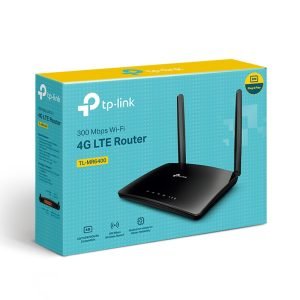
4. Install WiFi Access Points
For very large homes, a professionally installed WiFi access point network may provide a more structured solution.
Access points can be connected to the network using Ethernet cables and positioned strategically around the property.
This approach can be particularly useful when:
The house has multiple floors.
There are thick concrete walls.
Consistent coverage is required.
There are many connected devices.
Ethernet cabling is already available.
The homeowner wants a more permanent networking installation.
Unlike a basic wireless extender, a wired access point does not need to rely entirely on a wireless connection back to the main router.
For larger properties, this can provide a strong foundation for reliable home networking.
5. Use Ethernet for Important Devices
WiFi is convenient, but not every device needs to be wireless.
Where practical, connect high-priority devices using Ethernet.
Examples include:
Desktop computers.
Smart TVs.
Gaming consoles.
Network storage.
Security systems.
Workstations.
Home office equipment.
A wired connection can provide a stable link without relying on wireless signal strength.
You can also use Ethernet connections to support access points around a large home.
6. Reduce WiFi Interference
Wireless interference can affect network performance.
To improve your WiFi environment, consider:
Moving the router away from electronic equipment.
Avoiding unnecessary overlapping WiFi networks.
Using appropriate wireless channels.
Keeping router firmware updated.
Disconnecting devices that are no longer being used.
Using the appropriate WiFi frequency band for your device and location.
Modern routers and mesh systems can automatically manage some wireless settings, making network management easier.
Improving coverage is only part of the solution. If your connection is still slow after addressing coverage problems, see our guide on how to improve home internet speed for additional ways to optimize your connection.
7. Upgrade an Older Router
If your router is several years old, upgrading may improve both coverage and network performance.
Modern WiFi equipment can offer improvements in areas such as:
Wireless capacity.
Device handling.
Network management.
Security features.
Multi-device performance.
Coverage when used with compatible mesh nodes or access points.
However, replacing the router is not always enough for a very large property. If the problem is primarily physical coverage, additional nodes or access points may still be required.
If you use Safaricom Home Fibre, choosing a compatible router can also make a difference. See our guide to WiFi routers for Safaricom Home Fibre before choosing your next router.
Mesh WiFi vs WiFi Extender: Which One Do You Need?
Mesh systems and WiFi extenders can both increase coverage, but they are designed for different situations.
| Feature | Mesh WiFi | WiFi Extender |
|---|---|---|
| Coverage | Large areas | Specific weak areas |
| Multiple floors | Suitable | Possible, depending on placement |
| Single network | Usually | Depends on model |
| Expansion | Add additional nodes | Add additional extenders |
| Management | Often through an app | Varies |
| Best suited for | Larger homes | Smaller coverage gaps |
| Installation | Generally straightforward | Generally straightforward |
If you have one problematic room, an extender may be enough.
If you have multiple dead zones or a large multi-storey property, a mesh system may be a more convenient approach.
How Many Mesh WiFi Nodes Do You Need?
There is no universal number because every home is different.
The number of nodes you need depends on factors such as:
The size of the house.
Number of floors.
Wall thickness.
Construction materials.
Router location.
Number of connected devices.
Desired coverage area.
The specifications of the mesh system.
If your household regularly streams 4K video, plays online games, or has several devices connected simultaneously, your router needs to handle higher network demands. Our guide to choosing a router for streaming and gaming can help you understand what features to look for.
Manufacturers often provide recommended coverage areas for their systems, but these figures should be treated as estimates because real-world coverage depends heavily on the building itself.
For a large home, start with a system appropriate for the property’s size and add nodes only where coverage requires them.
Where Should You Place Mesh WiFi Nodes?
Placement can make a significant difference.
A common mistake is putting the second mesh node in the area where WiFi is already completely unavailable.
Instead, place the node somewhere between the main router and the weak coverage area, where it can maintain a good connection to the rest of the mesh network.
For multi-storey homes, consider the vertical layout as well as the horizontal distance.
For example:
Router → Mesh Node → Bedroom/Office
rather than:
Router → Dead Zone → Mesh Node
The exact placement should be adjusted based on the system’s signal-strength indicators and the layout of your home.
How to Improve WiFi Coverage Upstairs
If your router is downstairs and the upstairs rooms have weak WiFi, several options are available.
You can:
Move the main router to a more central location.
Install a mesh node upstairs.
Install a wired access point upstairs.
Use a WiFi extender where appropriate.
Run Ethernet to important devices.
For a large multi-storey home, a mesh system or wired access-point installation can provide more consistent coverage than relying on a single router.
How to Extend WiFi to a Garden or Outdoor Area
Outdoor coverage requires additional planning.
Exterior walls can significantly weaken wireless signals, and the distance between the house and garden may be substantial.
Depending on the property, you could use:
A strategically positioned mesh node.
An outdoor-rated access point.
Ethernet-connected networking equipment.
A dedicated wireless access point designed for outdoor environments.
Outdoor equipment should be specifically designed and rated for outdoor use. Avoid placing indoor networking equipment where it could be exposed to moisture, rain, heat, or other environmental hazards.
How to Choose the Right WiFi Solution for a Large Home
Before buying networking equipment, consider the following.
Home Size
Measure or estimate the area that needs coverage.
Number of Floors
A multi-storey property may require strategically positioned mesh nodes or access points.
Construction
Concrete walls and other dense materials can significantly affect wireless coverage.
Number of Devices
A modern home may have dozens of connected devices, including phones, laptops, TVs, cameras, smart appliances, gaming systems, and IoT devices.
Internet Speed
Your WiFi equipment should be capable of supporting the internet connection you pay for. However, faster internet does not automatically solve poor coverage.
Wired Connectivity
If Ethernet cabling is available, consider using it for access points and high-priority devices.
Future Expansion
Choose equipment that can accommodate additional nodes, access points, or devices if your networking needs grow.
Home WiFi Solutions in Kenya
Reliable WiFi has become essential for modern homes in Kenya. Families use home networks for remote work, online learning, streaming, gaming, smart-home devices, CCTV, video calls, and everyday browsing.
Choosing the right networking equipment can make a significant difference, particularly in larger homes.
FGEE Technology provides networking and computing solutions in Kenya, including routers, networking equipment, accessories, and other technology products.
Whether you need a simple router upgrade, a WiFi extender, or a more comprehensive home networking setup, FGEE can help you identify equipment suited to your requirements.
When choosing your equipment, consider the size and layout of your home rather than selecting a product based solely on its advertised maximum coverage.
Why Choose FGEE for Networking Equipment?
FGEE offers technology products and solutions for homes, businesses, schools, and other organizations in Kenya.
You can explore networking equipment for:
Home WiFi.
Mesh networking.
Routers.
Wireless access.
Network infrastructure.
Ethernet connectivity.
Computing and IT environments.
If you’re experiencing WiFi dead zones or unreliable connectivity, the right equipment can help create a more consistent home network.
Frequently Asked Questions On How To Extend Wifi Coverage On Large Home
How can I extend WiFi coverage throughout my entire house?
You can extend WiFi coverage by repositioning your router, installing a WiFi extender, using a mesh WiFi system, or deploying additional wired access points. For larger homes, mesh systems and strategically positioned access points are commonly used to cover multiple rooms and floors.
Is mesh WiFi better than a WiFi extender?
They serve different purposes. A WiFi extender can be useful for addressing a specific coverage gap, while a mesh WiFi system is designed to provide broader coverage across a larger property through multiple interconnected nodes.
How can I improve WiFi coverage upstairs?
Consider installing a mesh node upstairs, positioning the router more centrally, or installing a wired access point. The best option depends on the home’s layout, construction, and availability of Ethernet cabling.
Can a WiFi extender increase internet speed?
A WiFi extender primarily increases coverage rather than the speed of your internet connection. Actual performance depends on the connection between the extender and router, the extender’s capabilities, wireless interference, and your internet service.
How many mesh WiFi nodes do I need for a large house?
It depends on the size and construction of the house, the number of floors, and the specifications of the mesh system. Check the manufacturer’s recommended coverage and adjust the number and placement of nodes according to real-world conditions.
Where should I place my WiFi router?
Place the router in a relatively central, elevated, and open location. Avoid hiding it inside cabinets or placing it close to large metal objects and other potential sources of interference.
Does a better router improve WiFi coverage?
A newer router can improve wireless performance and capacity, but a single router may still struggle to cover a large or multi-storey home. Additional mesh nodes or access points may be necessary.
Can I use Ethernet with a mesh WiFi system?
Many mesh systems support wired backhaul, allowing nodes to communicate through Ethernet rather than relying entirely on wireless connections. Check the specifications of your particular system.
Final Thoughts
A large home does not have to mean unreliable WiFi.
Start by improving your router’s placement and identifying where the dead zones are. For a small coverage problem, a WiFi extender may be sufficient. For larger properties, multiple floors, or several dead zones, a mesh WiFi system or strategically installed access points can provide broader and more consistent coverage.
The key is to choose networking equipment based on your home’s size, construction, number of devices, and connectivity requirements.
If you’re looking for WiFi routers, mesh networking equipment, access points, extenders, Ethernet equipment, or other networking solutions in Kenya, explore the networking options available from FGEE Technology and choose a solution designed around your home.
Better coverage means fewer dead zones, more reliable connections, and a better connected home.